Tatar Women: Kazan, a Secular Islam and Ordinary Mixed Marriages
Tatar women are the counter-example to most of what people imagine about Islam in Russia. The Tatars are the country's second people, Turkic-speaking and Muslim for a thousand years, yet they live in a society where women study, work, marry whom they choose, and quite often marry an Orthodox Russian. In Kazan, the mosque and the cathedral stand inside the same Kremlin walls, and nobody sees it as a provocation. For a Western man who has read that "Muslim" means "out of reach", the Tatar case sets things straight. Here is who they are, what their culture keeps, and what it changes in a relationship.
Who the Tatars are
With 4.7 million people at the 2021 census, the Tatars are Russia's largest people after the Russians themselves. Only about two million of them live in Tatarstan, their republic on the Volga, whose capital is Kazan; the others live all over the country, with a large community in Moscow.
Tatarstan has 4 million inhabitants: 53.6% Tatars and 40.3% Russians in 2021. The two peoples have lived side by side since Ivan the Terrible took Kazan in 1552, and more than four centuries of coexistence have produced a society where the line between them is blurred.
The Tatar language is Turkic, a cousin of Turkish, Kazakh and Kyrgyz, the language of the Kyrgyz women of Bishkek, and has nothing Slavic about it. Names show it: Alsu, Guzel, Dinara, Aigul and Leysan are Tatar names, alongside the Alinas and Reginas that urban families also choose, as our article on Russian female names explains.
A secular Islam
The ancestors of the Tatars, the Volga Bulgars, adopted Islam in 922, more than sixty years before the baptism of Kievan Rus. In the nineteenth century, Kazan was the cradle of jadidism, a Muslim reform movement that put schooling, including girls' schooling, at the heart of its programme. Then came seventy years of Soviet atheism.
The result is an Islam of belonging rather than of practice. A Tatar woman from Kazan or Moscow celebrates Eid with her family, avoids pork at her grandmother's table and will be buried according to Muslim rites; but in town she rarely covers her hair, celebrates New Year like everyone else, and does not expect her husband to convert.
Key takeaway: for most Tatar women, Islam is a heritage, not a rulebook for marriage. The contrast with Chechen women, for whom a non-Muslim husband is excluded in principle, could hardly be greater.
Mixed marriages are ordinary
In Tatarstan, Tatar and Russian unions became common in Soviet times and have stayed that way. In 2010, the republic's Muslim Spiritual Directorate put the share of marriages between Muslims and Christians at about 30%, unchanged in twenty years despite the religious revival. The share is higher in Kazan than in the villages.
The children of these couples often carry a Tatar surname with a Russian first name, or the reverse, and grow up with two calendars of festivals. In such families, the question of the future son-in-law's religion is rarely asked; the question of his seriousness always is.
Kazan, the third capital
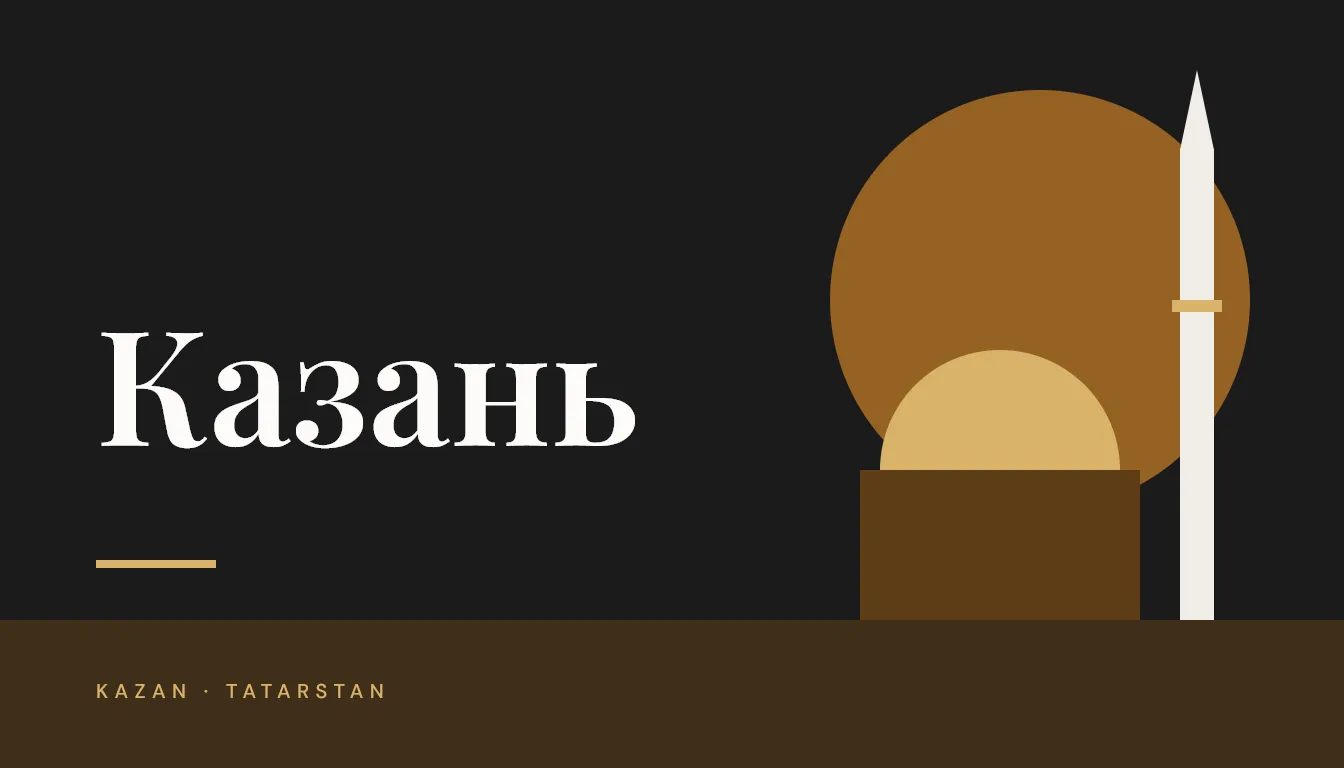
Kazan has about 1.3 million inhabitants and likes to call itself the "third capital of Russia". Its Kremlin, a UNESCO World Heritage Site since 2000, holds both the Kul Sharif mosque, rebuilt and opened in 2005, and the Cathedral of the Annunciation, built in the sixteenth century. Kazan University, founded in 1804, counts Leo Tolstoy and Lenin among its former students, and the new town of Innopolis, built from scratch for IT, shows the republic's ambitions.
For a visitor, it is one of the most pleasant cities in Russia: compact, clean, with a lively embankment on the Kazanka river, and an hour and a half from Moscow by plane. Our guide to meeting a woman in Moscow covers the capital, where more Tatar women live than in any city outside Tatarstan.
Is your project realistic?
25 questions, 8 minutes, an honest answer. Free, no commitment.
Take the compatibility testFamily and table
What Tatar culture keeps most visibly is in the family and on the table. Chak-chak, fried dough bound with honey, is served at every celebration; echpochmak, triangular pastries filled with meat and potato, are the national snack; and Sabantuy, the festival marking the end of spring sowing, fills the parks every June.
| Criterion | Tatar women | Russian women | Chechen women |
|---|---|---|---|
| Religion | Islam, mostly secular | Orthodoxy, often secular | Strict Sunni Islam |
| Who decides marriage | The woman | The woman | The family |
| Marrying a foreigner | Possible | Common | Excluded in principle |
| Weight of family | Strong | Strong | Decisive |
Sources: 2021 Russian census; Muslim Spiritual Directorate of Tatarstan (2010); agency observations since 2022.
Family weighs a little more than among Russians: parents are consulted, the extended family is present at the wedding, and the first dinner at her mother's lasts three hours.
What I see from Moscow
I have lived in Russia since 2021 and run the agency since 2022. Tatar women are among our members, and they register exactly like Russian women: same questionnaire, same expectations, same way of talking about a couple. A small minority of our members has a Tatar first name, and almost all of them live in Moscow, Nizhny Novgorod or Saint Petersburg, rarely in Kazan.
What strikes me is that religion almost never appears in their profiles. The box is left empty, as it is for most Russian women. When it is filled in, it is with one word, as soberly as an Orthodox woman who writes "believer". I have not yet seen a Tatar member make the religion of her future husband a condition, or ask for the wedding to take place in a mosque.
When a man asks me for a Tatar woman, I ask him what he is looking for. The answer is nearly always the same: a woman attached to her family, serious about her project, with roots. That profile is plentiful among Russian and Tatar women alike, and the profiles of our Russian members include both.
Frequently asked questions
Are Tatar women Muslim?
Most are Muslim by heritage, and the Tatars have been Muslim since 922. In daily life, especially in cities, the practice is largely secular.
Are Tatars Slavic?
No. The Tatars are a Turkic people with their own language. They are Russian citizens and usually native Russian speakers, but not Slavs.
Can a Tatar woman marry a Christian?
Yes, and it is common: about 30% of marriages in Tatarstan are between Muslims and Christians. Families care more about the man's seriousness than about his religion.
Where can you meet Tatar women?
In Moscow first, home to the largest Tatar community outside Tatarstan, then in Kazan. In an agency, they are not listed separately: they are among the Russian members.
What is Sabantuy?
The great Tatar summer festival, held in June to mark the end of spring sowing, with wrestling, races and open-air feasting.
In summary
The Tatar woman is Muslim the way many Europeans are Catholic: by heritage, by family, and without it dictating her marriage. She lives mostly outside Tatarstan, in the same cities as Russian women, with the same degrees and the same expectations. What she keeps is a wider family, a more generous table and two calendars of festivals. What she does not have is the veto that closes the Caucasus.
If you would like to know whether this ground suits your situation, write to me: I answer personally, and I'll tell you honestly whether your plan is realistic.
Ready to meet your future wife?
Take the compatibility test: free, confidential, no commitment.
Test my compatibility