Russian Wedding Traditions: Ceremony, Customs, and Symbols
A Russian wedding is not just the ceremony: it is a sequence of rites, codified gestures and symbols, each with a precise meaning — from the bouquet at the proposal to the traditional bread shared on the day. A Western man discovering all this on the morning itself misses the essential, and sometimes commits a blunder in front of the whole family. This article walks through Russian wedding traditions step by step: the proposal, the mandatory ZAGS registration, the day itself, and the customs your hosts genuinely care about.
The Russian wedding: much more than a ceremony
In Russia, marriage isn't a simple administrative formality. It's a structuring rite of passage, loaded with symbols, centuries-old traditions, and deep cultural meaning. Understanding Russian wedding traditions means understanding the vision Russian women have of the couple, the family, and commitment.
For a Western man considering a serious relationship with a Russian or Belarusian woman, knowing these codes isn't optional. It's an essential mark of respect — and often, a decisive advantage. Our matchmaking agency supports dozens of international couples each year: here's what the ground has taught us.
The marriage proposal: a codified gesture
The man's role in Russian tradition
In Slavic tradition, it's the man who proposes to the woman — and this proposal is taken seriously. No informal proposal, no "what if we got married?". The process is prepared, symbolic, and often public.
It's common for the future groom to ask for permission from the bride's parents — especially in traditional families and in provincial cities. This approach, perceived as outdated in the West, is on the contrary valued in Russia. It testifies to the man's respect for his future wife's family.
Engagement
Engagement (pomolvka) exists in Russia, but is less formalized than in the West. What matters more is the purchase of the ring — often gold or diamond. The engagement ring is worn on the left ring finger. The wedding ring is worn on the right ring finger — an Orthodox particularity that often surprises Westerners.
The ZAGS: mandatory civil marriage
Civil registration
In Russia, religious marriage alone has no legal value. Going through the ZAGS (Zapis Aktov Grazhdanskogo Sostoyaniya — Civil Registry Office) is mandatory. It's the ZAGS that gives the marriage legal existence.
Registration at the ZAGS is often transformed into a ceremony in its own right:
- Decorated hall, officer in ceremonial attire
- Reading of the civil commitment, exchange of rings
- Applause from the guests present
- Official photos in front of historical monuments (very common practice in Moscow and Saint Petersburg)
For international couples, civil marriage can take place in Russia or abroad. Our article on the visa for a Russian woman details administrative procedures depending on your situation.
The religious ceremony
Orthodox church marriage (venchanie) is legally optional, but very widespread in religious families. It takes place after the ZAGS — sometimes the same day, sometimes weeks later. To learn more about conditions and rules of remarriage, the article getting married in a Russian Orthodox church is a complete reference.
Traditions of the big day

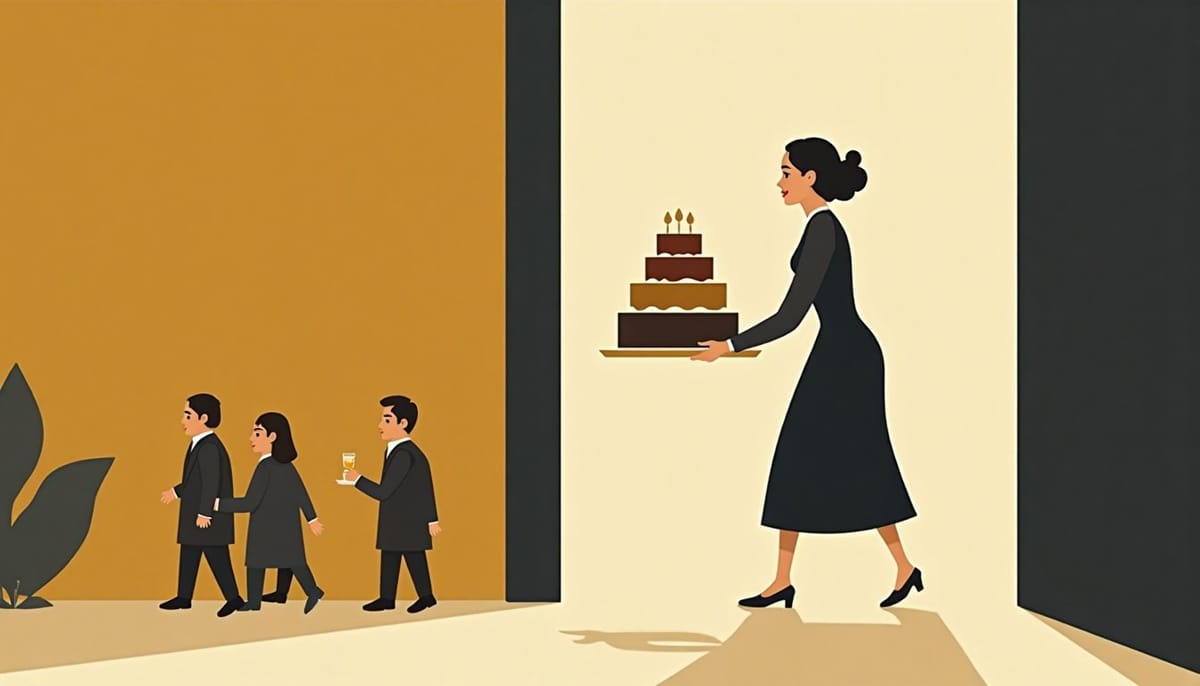
The five essential rites of a traditional Russian wedding.
| Tradition | What it consists of | Symbolism |
|---|---|---|
| Vykup nevesty (bride's ransom) | Groom goes through tests/ransoms at the bridesmaids' | Celebration, laughter, family cohesion |
| Hleb-sol (bread and salt) | Parents welcome with large round bread and salt | Abundance, hospitality |
| Gorko! | Guests shout, newlyweds kiss | Convivial game, atmosphere |
| Money envelopes | Gifts in cash in envelopes | Help the young couple start |
| Tamada (professional host) | Orchestrates games, speeches, dances | Structure of the evening |
The bride's ransom (Vykup nevesty)
This is one of the most spectacular and conviviale Russian traditions. On the morning of the wedding, the groom arrives at the bride's home — who is "hidden" by her friends and family. To "retrieve" her, he must go through a series of tests and challenges organized by the bridesmaids:
- Guess which of several women is his future wife (feet or hands sticking out from under blankets)
- Answer questions about the bride
- Pay symbolic "ransoms" — flowers, chocolates, small sums of money
- Sing or declaim poems in her honor
This ritual, the vykup, is above all a moment of celebration and laughter. It's not taken literally, but it structures the day and creates a warm atmosphere. For a Westerner participating in a Russian wedding, it's often a positive cultural shock.
Gifts and envelopes
In Russia, guests mainly offer cash in envelopes (dengi v kuverte). Gifts in kind exist, but are less common than in the West. The wedding list as we know it (open table, online shop) is rarely used in traditional households.
The amount varies depending on closeness to the newlyweds. It's common for close guests to offer substantial sums — sometimes several hundred dollars — to help the young couple start.
Bread and salt (Hleb-sol)
At the entrance of the reception hall, the groom's parents welcome the spouses with a karavai — a large decorated round bread, and salt. Each spouse takes a piece and dips it in salt. Whoever takes the biggest piece will be, according to tradition, "the head of the family". This rite symbolizes abundance and hospitality.
The toast (Gorko!)
As soon as the guests shout "Gorko!" ("bitter" in Russian), the newlyweds must kiss. Tradition holds that the tasting of the wedding wine is "bitter" until the spouses remedy it with their kiss. Guests count aloud while the spouses kiss. The longer it is, the more applause.
This moment happens several times in the evening — it's both a tradition and a convivial game that keeps the atmosphere going.
Is your project realistic?
25 questions, 8 minutes, an honest answer — free, no commitment.
Take the compatibility testThe Russian wedding banquet
A feast of several hours
The Russian banquet (svadebnyi bankvet) is an institution. Unlike the Western cocktail of 2-3 hours, a traditional Russian wedding easily lasts 6 to 10 hours. The table is covered with zakouski (cold and hot appetizers), successive hot dishes, desserts. You eat, you drink, you dance.
Alcohol is present — vodka, Russian champagne (shampanskoye), cognac. But contrary to clichés, modern Russian weddings increasingly include non-drinking guests, and ostentatious excess tends to diminish in educated circles.
Animations and dances
The tamada — professional wedding host — is a central figure of the Russian wedding. He orchestrates games, speeches, dances. The bride's dance (tanets nevesty) is a highlight. The newlyweds' waltz often opens the ball.
Traditional Slavic dances (khorovod, circle dances) are sometimes incorporated in more traditional or rural weddings.
What this changes for an international couple

The importance of showing commitment
For a Russian woman, a man who knows these traditions and respects them sends a strong message: he's interested in her culture, he takes the relationship seriously, he invests emotionally. Conversely, a man who arrives with the idea that "the wedding is just a party" will be perceived as immature.
The women we support in our agency all share this expectation: they want a man who enters their world, not a relational tourist.
Wedding abroad or in Russia?
The question of the wedding location is often debated in international couples.
| Location | Advantages | Limitations |
|---|---|---|
| Wedding in Russia | Bride's family + friends, full cultural immersion | Complex logistics for foreign guests |
| Wedding abroad | Administratively simpler | Absence of bride's family felt |
| Two celebrations (common compromise) | Respects both cultures, includes all families | Budget and organization doubled |
Key takeaway: the dual celebration (ZAGS + meal in Russia, then civil wedding + reception abroad) is the solution that respects both cultures. It's the choice of the majority of our couples.
How to prepare
If you are planning a wedding with a Russian or Belarusian woman, here are the four key pieces of advice.
| Advice | Why it matters |
|---|---|
| Learn a few Russian words | Effort is always appreciated, even imperfect — guide |
| Participate in traditions (vykup, toasts) | Not backing out = moments of family bonding |
| Discuss budget early | A Russian wedding can be costly, put things on the table |
| Involve your family (even from afar) | A video call with his parents before the wedding changes everything |
Key takeaway: a man who knows these traditions and respects them sends a strong message to his future Russian wife: he's interested in her culture, he takes the relationship seriously, he invests emotionally. The opposite — "the wedding is just a party" — is immediately detected as immaturity.
The Russian wedding is a celebration of commitment, family, and cultural continuity. For a Russian woman, it's often one of the most important days of her life. For you, it's an opportunity to show her that you understand and respect what matters to her.
If you want to go further in your project, the Strategy interview is the starting point.
Ready to meet your future wife?
Take the compatibility test — free, confidential, no commitment.
Test my compatibility