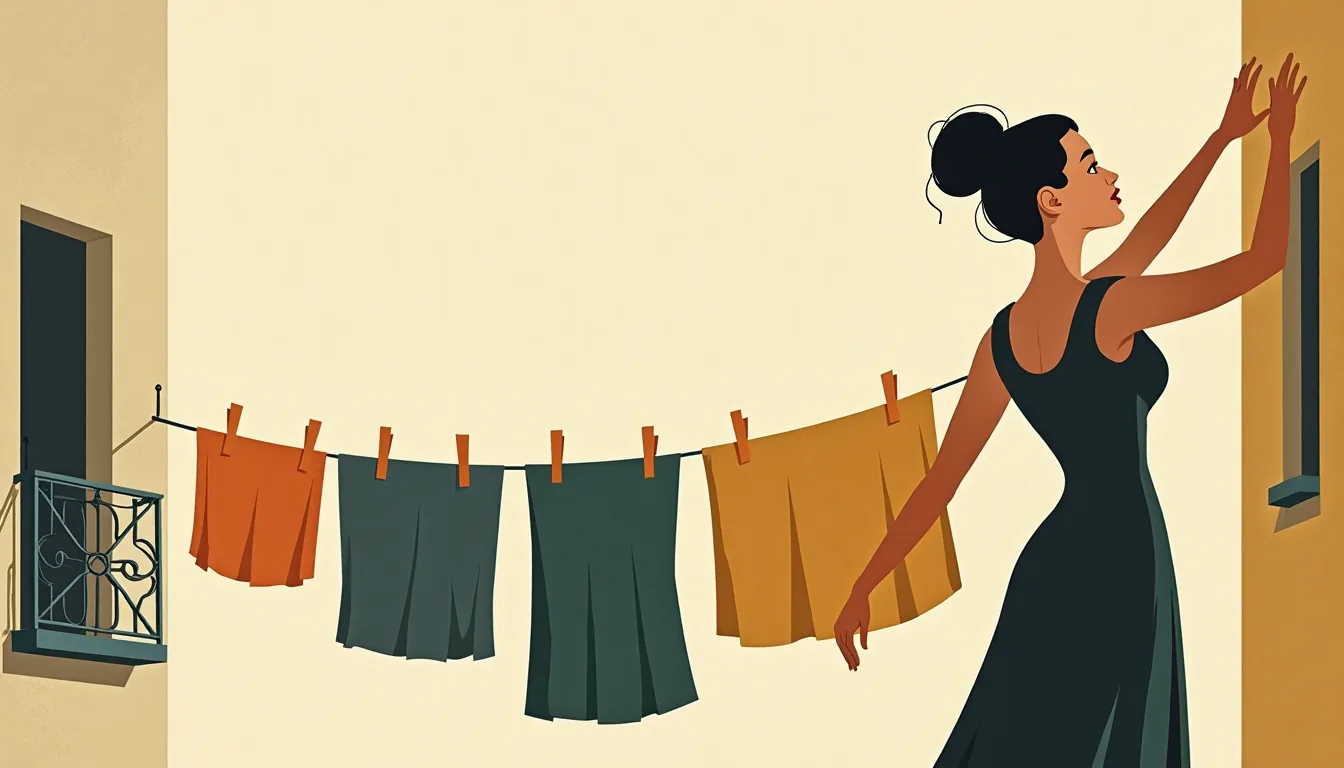

Playing hard to get: the paradox at the heart of desire
"Flee me and I follow you; follow me and I flee you." The French have turned this into a proverb, and everyone has lived it at least once, usually on the evening of an unanswered message. Playing hard to get works on a paradox we all know from the inside: the more distant someone is, the more they occupy our thoughts; the more available they become, the faster our momentum fades. Is it just an ego game? Not quite. Behind the old saying sit very real psychological mechanisms, ones I watch play out every week in the relationships I guide. Here is where the idea comes from, why it is partly true, where it goes wrong, and how to find the right distance without turning your love life into a chess match.
Where the idea comes from
In France the saying is almost always credited to Marcel Proust. The exact sentence appears nowhere in his work: it is a folk condensation of what runs through the whole of "In Search of Lost Time," where the narrator never desires Albertine more than when she slips away from him. Proust even has a phrase for it, the "fugitive being," the one you never fully possess and who, for that precise reason, never leaves your mind.
The idea is far older than him. The Latin poets already advised lovers to keep others waiting, and every tradition of courtship, from Versailles to the nineteenth-century novel, leans on the same spring. If the formula has survived this long, it is not because it is a rulebook for romance: it is because it describes a reflex of the human heart that every generation rediscovers at its own expense.
What psychology actually says
Three mechanisms combine to prove the proverb partly right. The first is what psychologists call reactance: the moment our freedom to obtain something is restricted, the urge to obtain it grows. A door that closes makes us want to open it; a heart that withdraws makes us want to hold it back.
The second is scarcity. We instinctively price things by their availability: what is rare feels precious, what is guaranteed feels ordinary. A person whose attention has to be earned seems, rightly or wrongly, to be worth more than one who replies within the second.
The third is the most powerful: uncertainty. A "maybe" occupies the mind infinitely more than a "yes" or a "no." As long as the answer hangs in the air, the brain replays every scene, hunts for clues, reads meaning into every silence. That constant mental work feels remarkably like passion. It is not.
Key takeaway: absence does not create love, it creates attention. Confusing the two means mistaking insomnia for feeling.
The couple that chases without catching
The paradox turns destructive when it settles between two people who could genuinely match. It is the classic pursue-withdraw dance: one steps forward, the other steps back, and the more one advances, the more the other retreats. Each confirms the other's fear without meaning to; the pursuer feels abandoned, the withdrawer feels invaded.
There is nothing random about the pairing: it almost always sets an anxious attachment style, which seeks reassurance through contact, against an avoidant one, which protects itself through distance. The two attract each other with unsettling regularity, and I cover the mechanics in my article on attachment styles. Keep the essential point: when someone's distance obsesses you, the real question is not "how do I catch them" but "why does this particular game pull me in so hard."

Why chasing makes people run
Look at the mechanics closely, starting on the chaser's side. Every unanswered message raises the stakes: you have invested, so it has to pay off. So you follow up, over-explain, overperform. What was interest becomes pressure.
On the other side, the same scene reads differently. Overflowing, unrequested attention is not received as a gift but as a debt: it would have to be answered, deserved, managed. The simplest way not to owe anything is to move away.
The heart of the matter is this: desire needs a space to cross. Being permanently available does not extinguish attraction because you are "worth less," but because there is nothing left to win, to guess, to hope for. And the opposite is just as true: someone who never shows anything eventually wears people out. Desire dies of suffocation, but it also dies of hunger.
What the saying does not tell you
Turning this observation into a strategy is the worst possible reading. Acting indifferent works in the short term, granted: it triggers exactly the mechanisms described above. But look at who stays until the end of the game. Balanced people, the ones who know what they want, walk away from weathervanes quickly. The ones who stay hooked are those drawn to lack itself, and they love the game, not you.
Second blind spot: the paradox fades in a relationship that is doing well. Security does not kill desire, whatever the adage implies. What kills it is fusion, the total absence of space between two lives. A couple where each keeps a territory, friends and projects of their own needs no staged escapes to keep wanting each other.
Third and cruellest trap: the saying too often serves as an alibi for holding on. "She is running away, so she must be testing me." No. Sometimes running away simply means no. The paradox of desire is real, but it does not cancel the most reliable signal there is: a person who wants to see you finds a way to see you.
Key takeaway: being desirable is not a role to play, it is the natural by-product of a full life. Games attract players; autonomy attracts partners.

Is your project realistic?
25 questions, 8 minutes, an honest answer — free, no commitment.
Take the compatibility testFinding the right distance
How do you escape the dilemma without becoming a strategist? A few markers I give the men I work with:
- Keep a life that does not wait for her. Sport, work, friends, projects: healthy distance is not performed, it flows from a real schedule. That is the whole difference between being busy and playing busy.
- An unanswered message gets one follow-up, not two. A courteous nudge after a few days, yes. The next one never wins anyone back; it only documents your anxiety.
- Reply at your real pace. Not within the second out of nerves, not three days later out of calculation. Naturalness can be felt, and so can arithmetic.
- Offer, then let her take a step. A relationship is a staircase you climb together: if you climb every step alone, you arrive at the top alone.
- Judge on reciprocity, not intensity. The right question is never "is she thinking of me?" but "is she also taking steps toward me?"
At a distance, the trap is doubled
Everything above plays out at ten times the intensity in an international relationship. When a budding connection lives on messages between Paris and Moscow, every silence takes on absurd proportions: a time zone reads like flight, a busy day like indifference. And since the screen is the only link, the temptation to over-message is immense, which is precisely the behaviour that smothers early desire.
A useful reference point: a Russian woman who is interested in you does not usually play at being unreachable. Dating culture there is more direct than in the West; people do not drift through years of ambiguity. If she answers warmly but at her own pace, that is not flight, that is a life. If you have to chase her to exist at all, that is not a test, that is an answer. And before concluding anything from her online profile, read the image trap: half the cooling-offs I see are born of a misread Instagram.
In the agency's guidance, this is a point I work on constantly: building depth rather than volume, a few real exchanges rather than a stream of anxious attention. My guide to long-distance communication details the right rhythm, and the 36 questions to fall in love give you far better material than a daily "hi, how are you?" If this chase turns into a game of roles where one pleads and the other pulls away, it is sometimes the Karpman drama triangle that has set in, victim on one side, persecutor on the other. If you recognise yourself in this exhausting dance and want out of it, write to me: it is exactly the kind of knot an outside eye unties quickly.

Frequently asked questions
Where does "flee me and I follow you" come from?
The French proverb "fuis-moi je te suis, suis-moi je te fuis" is almost always attributed to Marcel Proust, yet the exact sentence appears in none of his books. It is a popular condensation of his idea of the "fugitive being": we never desire someone as much as when they escape us. Passed down as a proverb, the phrase has no certain author.
Does playing hard to get actually work?
In the short term, yes: distance mechanically triggers attention. In the long term, no: performed indifference attracts people who enjoy the game and drives away balanced partners. What works durably is the authentic version of the same principle: a full life, a natural rhythm, and space left for the other person to take steps of their own.
Why do we want what we cannot have?
Three mechanisms stack up: reactance, which makes us crave whatever restricts our freedom; scarcity, which makes rare things feel precious; and uncertainty, which keeps the mind replaying the story as long as the answer is not settled. Together they produce intense attention that is easily mistaken for love.
What should I do when the person I love pulls away?
Stop chasing: every extra follow-up deepens the withdrawal. Give the exchange air, refocus on your own life, then judge on actions. If they come back on their own, an honest conversation about pace is worth more than any game. If they do not, it was never strategic distance: it was an answer.
What I observe in long-distance couples
Since 2022 I have watched this pattern play out at a distance, where it is amplified: a delayed reply is read as strategy when it is usually just a working day.
The useful distinction, in my experience, is between rhythm and retreat. A woman who answers warmly but on her own schedule has a life; a woman who reappears only when you stop writing is running a loop. The first is worth patience. The second is worth a direct question, once, and a decision after that.
Ready to meet your future wife?
Take the compatibility test — free, confidential, no commitment.
Test my compatibility