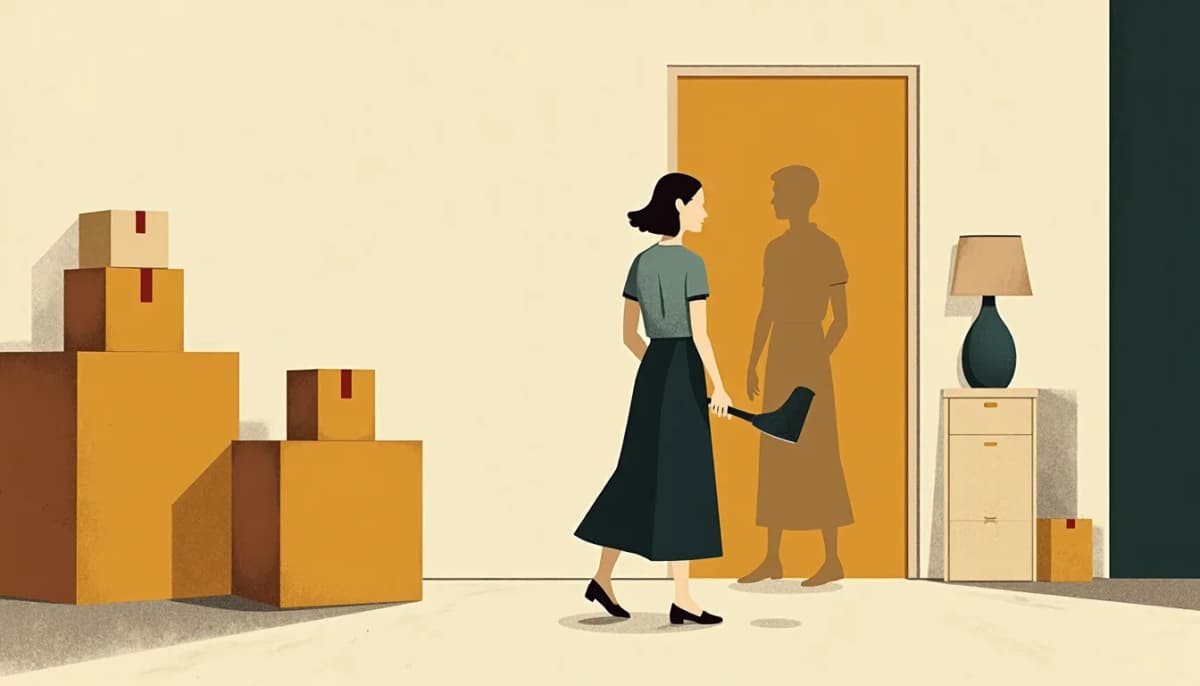

Is Russia Really a Patriarchal Society? The Honest Answer
Men ask me this question regularly, most of them quietly hoping the answer is 'yes, completely.' The reality is far more nuanced. And honestly, far more interesting.
– Valentin, depuis MoscouIs Russia really a patriarchal society? The question deserves better than the reflex answer. Seen from outside, everything seems to confirm it: a conservative official discourse, assertive male roles, chivalry everywhere. Seen from inside, the reality is almost the reverse within the home, where women decide most things. This double system explains most Western men's misreadings, taking the façade for how things actually work. This article dismantles both readings and shows what it means inside an international couple.
Patriarchy or Matriarchy: Why Russia Doesn't Fit Into Any Box
A Western man who is interested in Russian women must understand a fundamental paradox: Russia displays an institutional patriarchy but operates on a daily basis according to a domestic matriarchy. Confusing one with the other leads to serious relationship misunderstandings. This article deconstructs the myth, exposes the real mechanisms of power in Russia, and explains what this concretely means for a man who wishes to build a couple with a Russian woman.
Visible Male Domination: A Surface-Level Reading
Male Authority in Institutions
Russian institutional structures massively favor men in leadership positions. The State Duma has fewer than 16% women among its deputies. Regional governors are almost exclusively male. Corporate boards of major companies, military command, senior administration: all these spaces remain male-dominated.
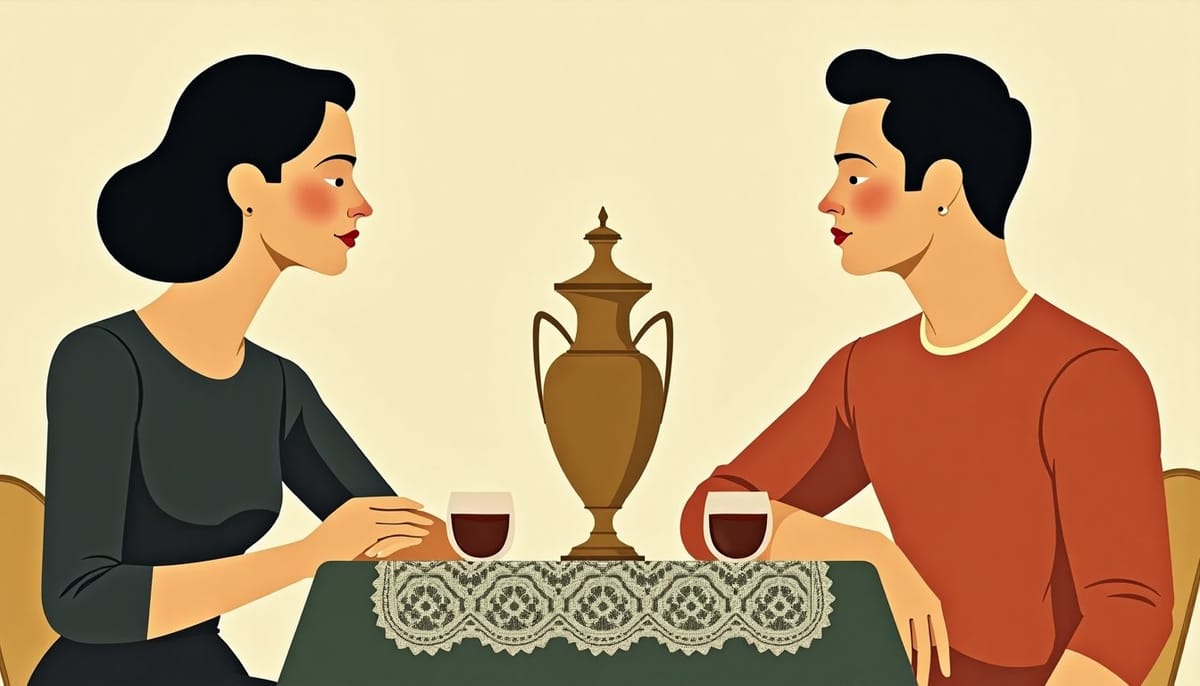
Russian political culture values vertical power structures associated with masculinity: capacity for command, firmness, resolve. The Russian political model is built on the image of the strong man, decision-maker, protector of the nation.
But this institutional reading is profoundly misleading if applied to daily life. A Western man who arrives in Moscow with the idea of a society submitted to male authority makes a strategic error. Russia operates according to a dual power system: one visible and public, the other invisible and domestic. And it's the latter that determines the reality of families.
The Influence of the Orthodox Church
Since the collapse of the USSR in 1991, the Russian Orthodox Church has regained considerable social influence. It advocates a hierarchical family vision: the man protects and leads the household, the woman takes care of the children and family bonds. Approximately 70% of Russians identify as Orthodox, although active religious practice concerns a minority.
The Church legitimizes the man's role as head of the family. But in practice, this theoretical framework is constantly negotiated, adapted, circumvented by women. Doctrine says one thing, domestic reality shows another. To learn more about religious marriage in Russia, consult our article on getting married in a Russian church.
The Myth of the Muzhik: The Russian Male Archetype
The muzhik, the resilient, stoic, enduring Russian male, remains a powerful cultural archetype. It celebrates the male capacity to endure adversity, protect his family, and work without complaining. This ideal is fueled by Russian history: wars, famines, political upheavals, harsh climate.
But this archetype is also a facade. Behind the image of the invincible muzhik, the statistical reality is brutal: massive alcoholism, male life expectancy of 67 years compared to 77 for women, male suicide rates among the highest in the world. The muzhik is an ideal that few Russian men actually embody.
Female Power: The Invisible Reality
Domestic Authority of Russian Women
In the vast majority of Russian households, the woman runs family life. She organizes daily routines, manages the household finances, makes educational decisions, arbitrates family conflicts, plans vacations, and maintains relationships with extended families.
This domestic power is neither theoretical nor marginal. It is structural. Russian sociological studies show that in over 70% of households, the woman manages the family budget. The man brings in the money; the woman decides how it's used. This distribution is culturally accepted and rarely contested.
What this means for a Western man: expecting a Russian woman to be passive in household management is an illusion. She will have strong opinions about finances, children's education, and daily life organization. And she will expect her opinion to be respected.
The Central Role of Babushkas
The babushkas, Russian grandmothers, occupy a position of considerable informal power. They transmit traditions, moral values, and collective memory. They often control childcare and education decisions. In many families, it's the babushka who has the final say on important matters.
This intergenerational power has no equivalent in the West. The Russian grandmother is not a decorative figure: she is a center of family power. A man who marries a Russian woman also marries, in a sense, her family. And in that family, the babushka is often the most influential person.
Single Mothers: Total Authority by Default
High divorce rates in Russia (approximately 65% of marriages end in divorce) create numerous single-parent households led by women. In these households, the woman exercises complete domestic authority: decision-making, organization, education, finances. She shares power with no one.
This reality produces women who know how to manage on their own, who have developed strong decision-making autonomy, and who will not accept a partner who tries to take away that autonomy. A man who understands this and who proposes a complementary partnership rather than a power takeover will have a decisive advantage.
Is your project realistic?
25 questions, 8 minutes, an honest answer. Free, no commitment.
Take the compatibility testStatistics That Illuminate the Reality

Demographic and Social Data
| Indicator | Women | Men |
|---|---|---|
| Life expectancy | 77 years | 67 years |
| Workforce participation | 48% | 52% |
| University degrees earned | 57% | 43% |
| Pay for equivalent position | -30% vs men | Reference |
| Divorce initiation | 70% | 30% |
Key takeaway: women are more educated, live longer, manage households, initiate divorces, but earn less and hold fewer institutional roles. They hold domestic power, not institutional power. Miss this distinction and you mistake Russia for a submissive culture. It's the opposite.
What These Numbers Reveal
The Russian paradox is the following: women are more educated, live longer, manage households, initiate divorces, but earn less and hold fewer leadership positions. They hold domestic power but not institutional power.
For a foreign man, this configuration means that his future partner will probably be more educated than him, more accustomed to managing a household, more decisive in daily life. This is an asset, not an obstacle, provided you don't arrive with the illusion of a submissive woman. The article on the secrets of Russian women explores this dynamic further.
The Soviet Legacy: Equality by Force
What the USSR Changed
The Soviet Union imposed legislative gender equality from the 1920s: voting rights, access to education, labor market participation, legalization of abortion. Soviet women worked in factories, laboratories, hospitals. They were cosmonauts, engineers, doctors.
But this formal equality was accompanied by a double burden: full-time professional work and total domestic responsibility. The Soviet state never redistributed household tasks. Women worked as much as men outside and continued to manage everything at home.
The Lasting Impact on Mindsets
This legacy produced women who consider work as normal, autonomy as a given, and total dependence on a man as a risk. Modern Russian women carry within them this collective memory: they know they can function alone. What interests them in a man is not dependence; it's added value.
What I observe in Moscow
Living here since 2021, the gap between the official discourse and daily arrangements stops being a theory and becomes an ordinary observation.
In the couples I meet, the man is expected to lead the direction (where to live, what project to pursue) while the household budget, the children's schooling and the family calendar are decided by the woman, usually without discussion. Western men who arrive expecting either a submissive wife or a Western-style egalitarian negotiation are both surprised, and both have to adjust.
Key takeaway: in practice, Russia runs on visible male authority and invisible female decision-making. A man who confuses the façade for the mechanism will misread almost every domestic conversation he has.
What This Means for Your Relationship Project

Forget the Fantasy of the Submissive Woman
If you're looking for a Russian woman because you imagine a docile, obedient, and silent partner, you're in for a disappointment. Russian women are assertive, organized, demanding. They respect a man who respects them, who brings stability, who demonstrates leadership without authoritarianism. They don't respect a man who confuses leadership with domination.
The Model That Works
The Franco-Russian couple that works is built on accepted complementarity: the man provides the vision, material stability, the framework for life. The woman provides warmth, daily management, family bonds. Each has their area of expertise. Neither dominates the other. Both contribute to the shared project.
This model requires from the man a genuine relational maturity: the ability to listen, to negotiate, to accept that his partner has strong opinions. The men who succeed in Franco-Russian couples are those who understand that mutual respect is the foundation, not unilateral authority.
To assess your compatibility with this relationship model, take the compatibility test. And to discover the profiles of Russian women who correspond to this vision of couplehood, browse our female members.
The Question to Ask Yourself
Before seeking a Russian woman, ask yourself this question: are you ready to share power within the couple? If yes, Russia offers exceptional partners. If no, no country will solve your problem, because the problem will be you.
"We see a patriarchy, it is displayed and demanded. But it is a discreet, silent, and resilient matriarchy" that keeps Russian society running. Understanding this paradox means understanding the Russian woman. And understanding the Russian woman is the first condition for building a solid couple with her.
Frequently asked questions
Are Russian women submissive?
No, and the belief is the single most costly misreading a Western man can bring. Russian women are direct, hold strong opinions and expect to be consulted on everything concerning the home and the children. What can look like deference in public is a social code about roles, not a hierarchy of decision-making.
Do Russian women expect a man to lead?
They expect him to take initiative and to hold a direction: where to live, what to build, what the plan is. That is different from deciding alone. A man who proposes nothing is judged passive; a man who decides without consulting is judged authoritarian. The workable position sits between the two.
Has this changed among younger generations?
In the big cities, considerably. A woman of thirty in Moscow or Saint Petersburg is likely to earn her own income, own or rent independently, and hold clear expectations about shared responsibilities. The traditional framework survives more strongly in medium-sized towns and in the way families organise themselves.
Does this affect a mixed couple in practice?
Yes, mainly in daily arrangements rather than principles. Expect the household budget, schooling and the family calendar to fall to her without discussion, and expect to be asked, plainly, what your plan for the couple actually is. Neither is negotiable in the sense that both are assumed.
Ready to meet your future wife?
Take the compatibility test: free, confidential, no commitment.
Test my compatibility